Turning Waste into Energy: The Benefits of Thermal Treatment Technologies
Our Energy and Projects Engineer Derek Jamieson explores the different characteristics of incineration and pyrolysis
The world is experiencing an escalating waste crisis with over 2 billion tonnes of municipal waste produced globally annually, a figure which is expected to reach 8 billion tonnes by 2050. In the UK, over 190 million tonnes of waste are produced yearly, with households generating 25.9 million tonnes in 2023. Less than 20% of global waste is recycled, with the UK currently recycling 44%, and although the percentage is slowly increasing, with the spike in waste production, more needs to be done.
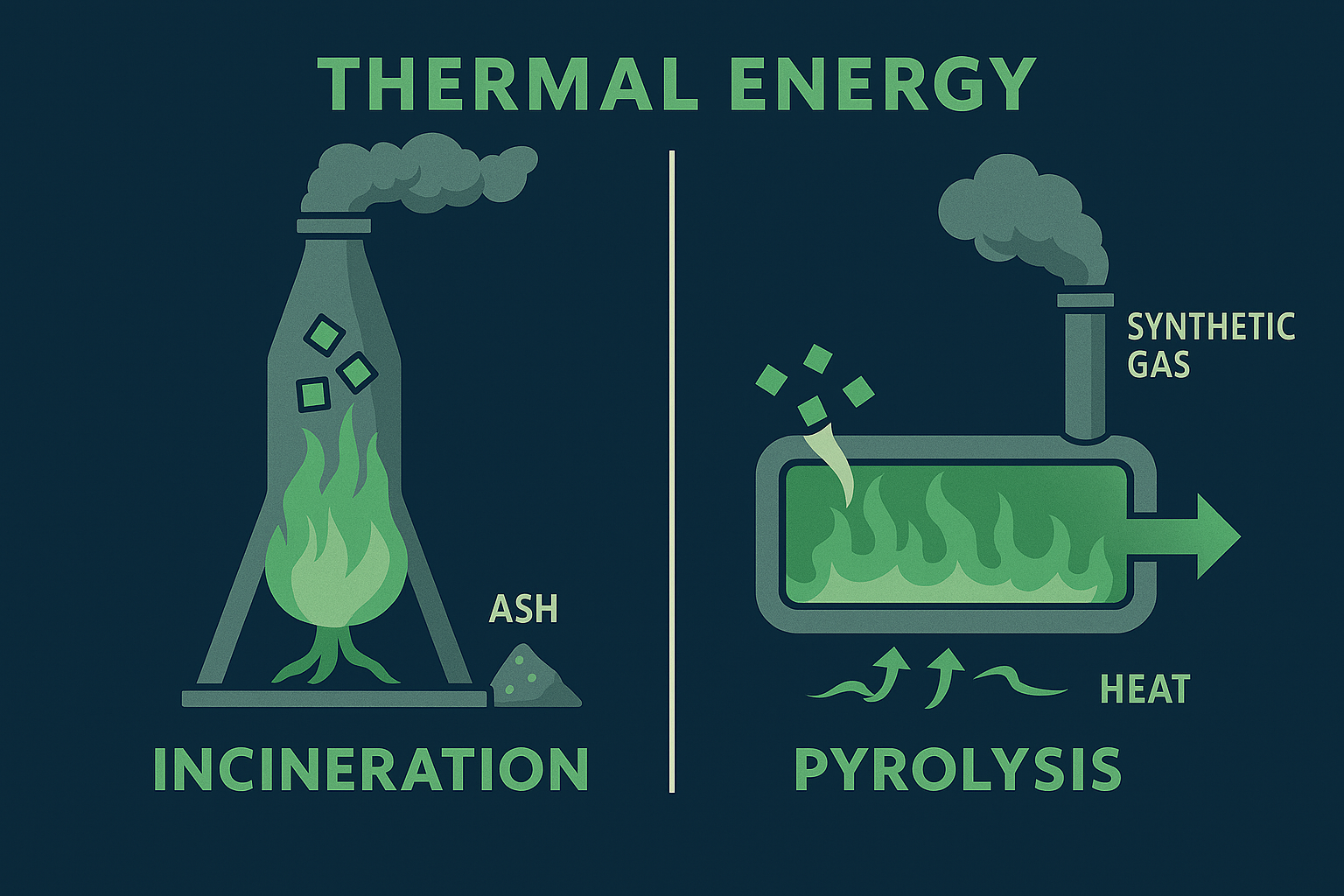
The shift towards a circular economy is certainly growing with many waste and recycling companies evolving to meet consumer and regulatory demand and there are a growing number of options currently available for treating waste. Thermal waste treatment has expanded steadily over the past decade and continues to grow. There are two thermal processes used for waste treatment, pyrolysis and incineration, they both function differently and have their own characteristics and end products.
Incineration
Incineration burns waste in the presence of excess oxygen at temperatures of over 800°C. Waste is converted into ash and gases, greatly reducing the volume of the waste. The leftover ash however often contains toxic substances (e.g. heavy metals), and requires extra care when handling and during disposal. Gases produced are also environmentally unfriendly; emissions typically containing air pollutants. As such, incineration facilities are subject to strict environmental safety restrictions. Incineration facilities can recover heat generated to produce energy becoming energy from waste facilities. Incineration facilities are preferred for municipal and medical waste.
Pyrolysis
Pyrolysis heats waste in an anaerobic environment. As oxygen is absent it cannot be said that pyrolysis burns or combusts waste, instead complex organic molecules in the waste are decomposed to simpler compounds. Pyrolysis operates at temperatures ranging from 400°C to 1000°C. Pyrolysis typically is used for plastic, tyre, and biomass waste. Pyrolysis produces bio-oil and syngas which can be re-sold as fuels, plus biochar which has industrial and agricultural applications. Pyrolysis produces reduced emissions compared to incineration and is reputationally more environmentally friendly.
Both processes are heavily regulated under UK Environmental Permitting Regulations and the Industrial Emissions Directive, but with key differences. Pyrolysis syngas that is burned without further purification is classed as waste incineration and is subject to the same environmental restrictions, but syngas purified to meet the standard of natural gas, allows some exemptions from legislative requirements. Pyrolysis and incineration plants are treated differently by planning regulations, with pyrolysis assessed against waste hierarchy rules as an advanced process. England introduced a temporary pause on new EfW plant permits in 2024. Wales and Scotland have had moratoriums on new incineration plants since 2021 and 2022 respectively.
We have a proven track record in a wide range of energy from waste projects. Get in touch to find out more.